Looking Back: Kokoda
Looking Back: The Kokoda Track
Alongside Gallipoli and the Battle of the Somme, the Kokoda Track stands as a defining milestone in Australia’s wartime history. In 1942, soldiers fought through the thick jungle to defend Port Moresby—a feat that protected Australia from Imperial Japan, and one that still draws Australians to the track to honour their sacrifice.
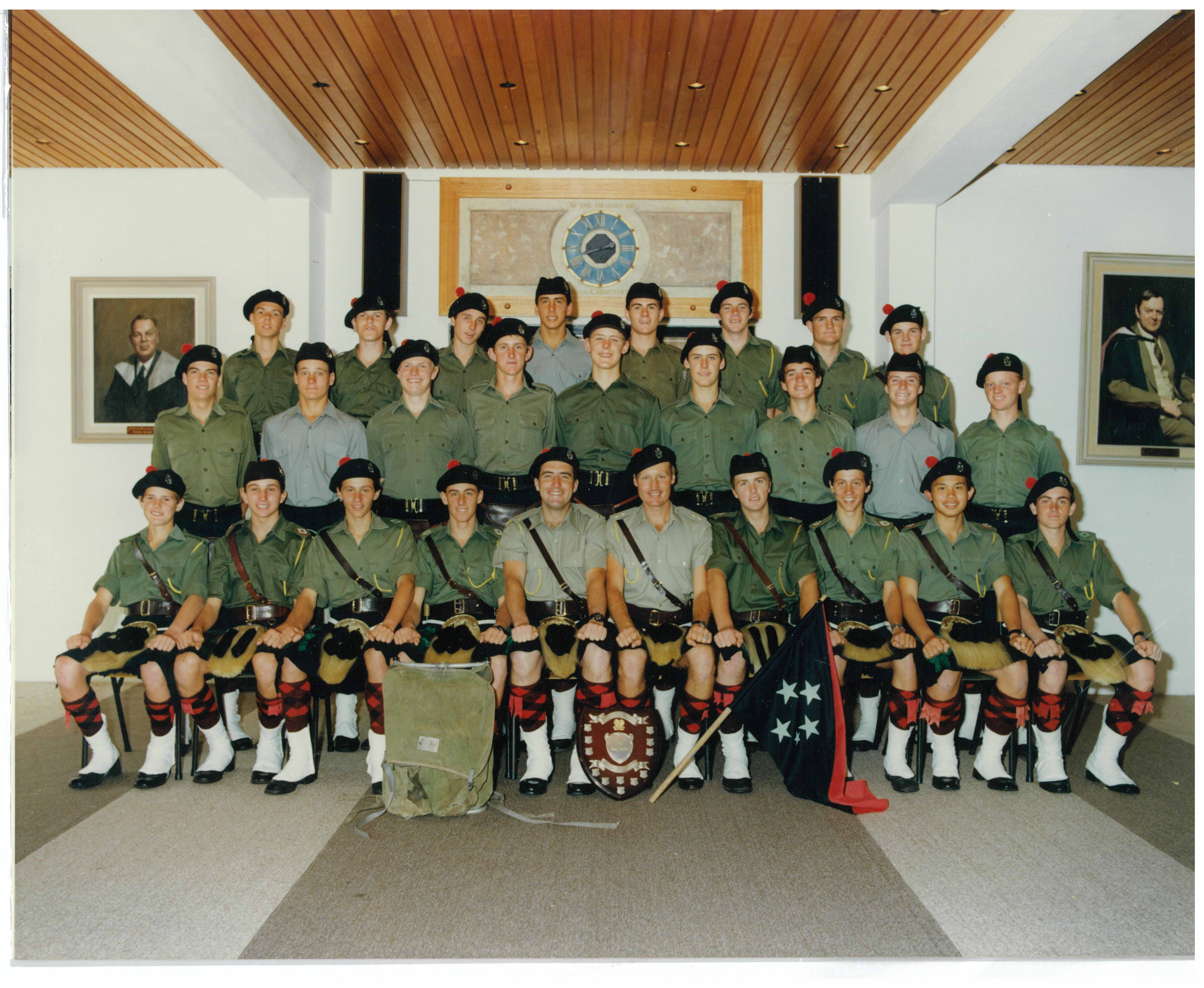
For 40 years, from 1969 to 2009, The Scots College Cadet Unit undertook the trek nearly every decade, forging one of the College’s most enduring traditions. Each crossing presents its own challenges and triumphs, connecting generations of boys to the courage and commitment of those who fought along the track.
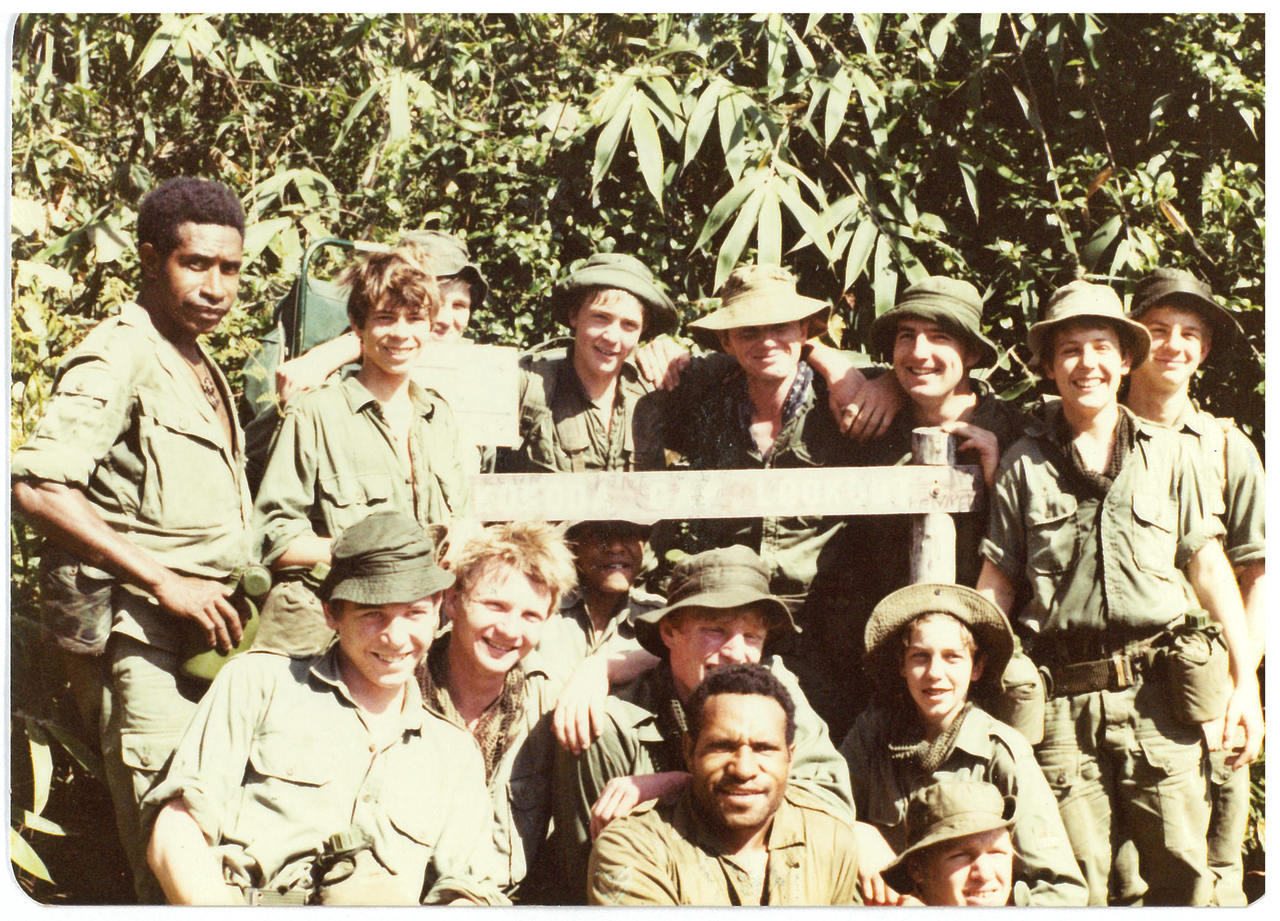
The first attempt in 1969 was both daring and formative. Twenty-nine Cadets and two Masters set out from Sydney to Port Moresby, spurred on by Major JH Moore, an ancient history master and military historian who had long urged Scots to take up the Kokoda challenge. “Nobody knew exactly what to expect, but there was a great spirit of adventure in all of us,” recalled Alan Rydge (‘70), one of the Cadets on that first expedition.
Preparation was key. “We trained under the dense canopy of the Cooper Park hills below Bellevue Rd to get a small taste of the kind of terrain we would face on the track,” Alan said. Despite the training, the expedition quickly proved its toughness. The journey was nearly abandoned on the second day when Major Moore badly sprained his ankle, forcing the group to return to Kokoda village.
With support from the Papua New Guinea Defence Force, the Cadets were flown ahead to Kagi village on a small Pilatus PC-6 Porter aircraft to continue the trek. “Flying in the Pilatus PC-6 Porter was a hairy experience. Touching down on those narrow jungle airfields is a memory that has stayed with me,” Alan recalled.
After eight gruelling days battling heat, humidity, river crossings, and steep jungle ridges, they reached their goal, establishing Kokoda as a living tradition in Scots Cadet life. Along the way, the evidence of the conflict was ever-present, connecting the boys not only to the land but to the soldiers whose courage had defined Australia’s wartime history.
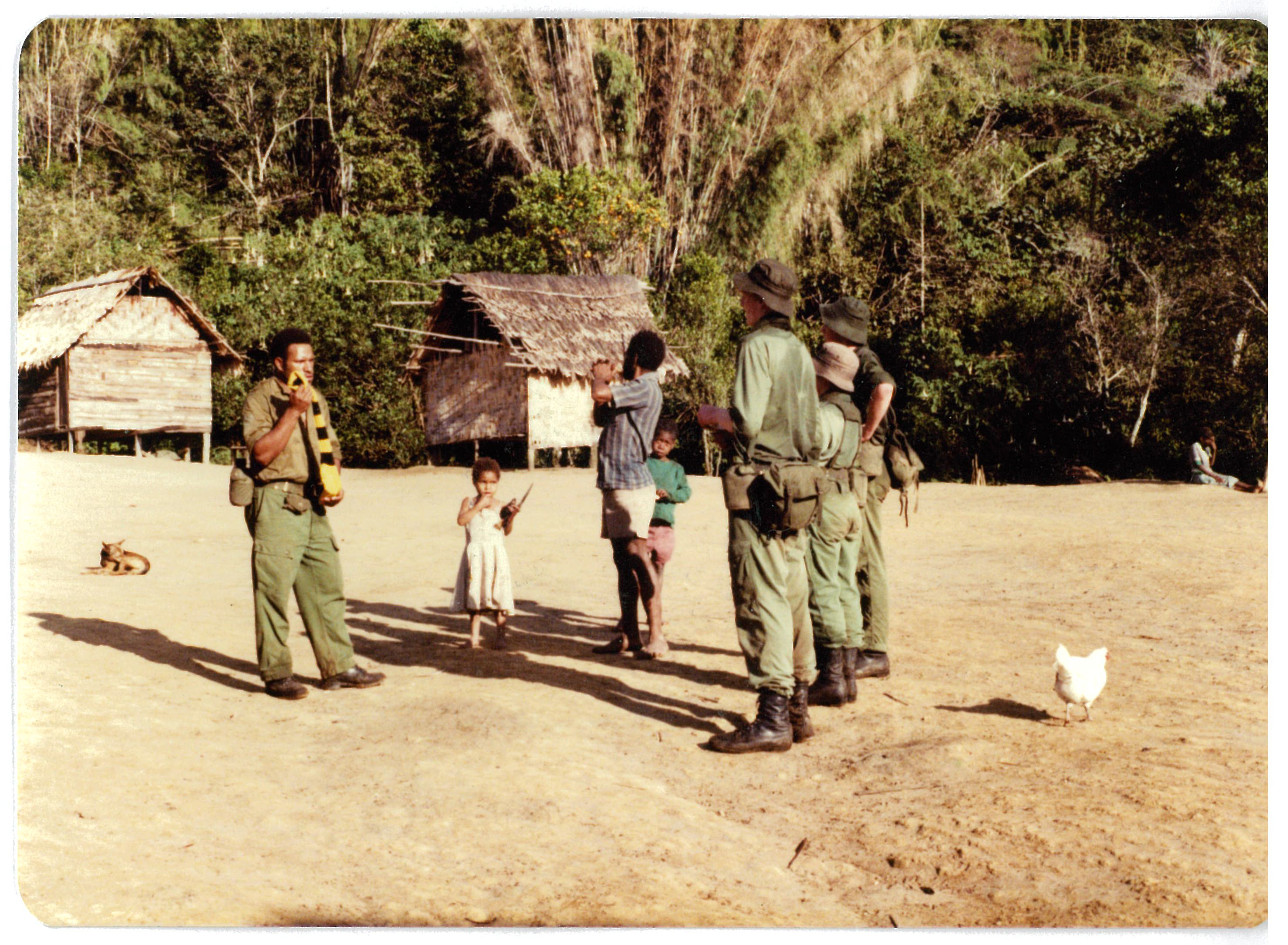
Just over a decade later, in 1982, stalwart College Colonel, Mr Paul Cooper was invited by then Commanding Officer of the College’s Cadet Unit, Colonel Chris Hogg, to lead an expedition. Paul recalls the trail being barely maintained, with dense jungle closing in on both sides, much like the conditions the Anzacs would have faced. “If you wandered too far to go to the toilet and didn’t turn around, you wouldn’t find the track,” he remembers.
Rob Tuck (’83) recalls the experience vividly. “The undergrowth on either side of the trail was so dense you couldn’t see a metre into the jungle. We all felt very privileged to walk the same track as our soldiers all those years ago who gave their lives to defend our country and freedom.” Thanks to very good weather and a guide from the Papua New Guinea Defence Force, that crossing in 1982 was a record-fast crossing at the time, in just under five days.
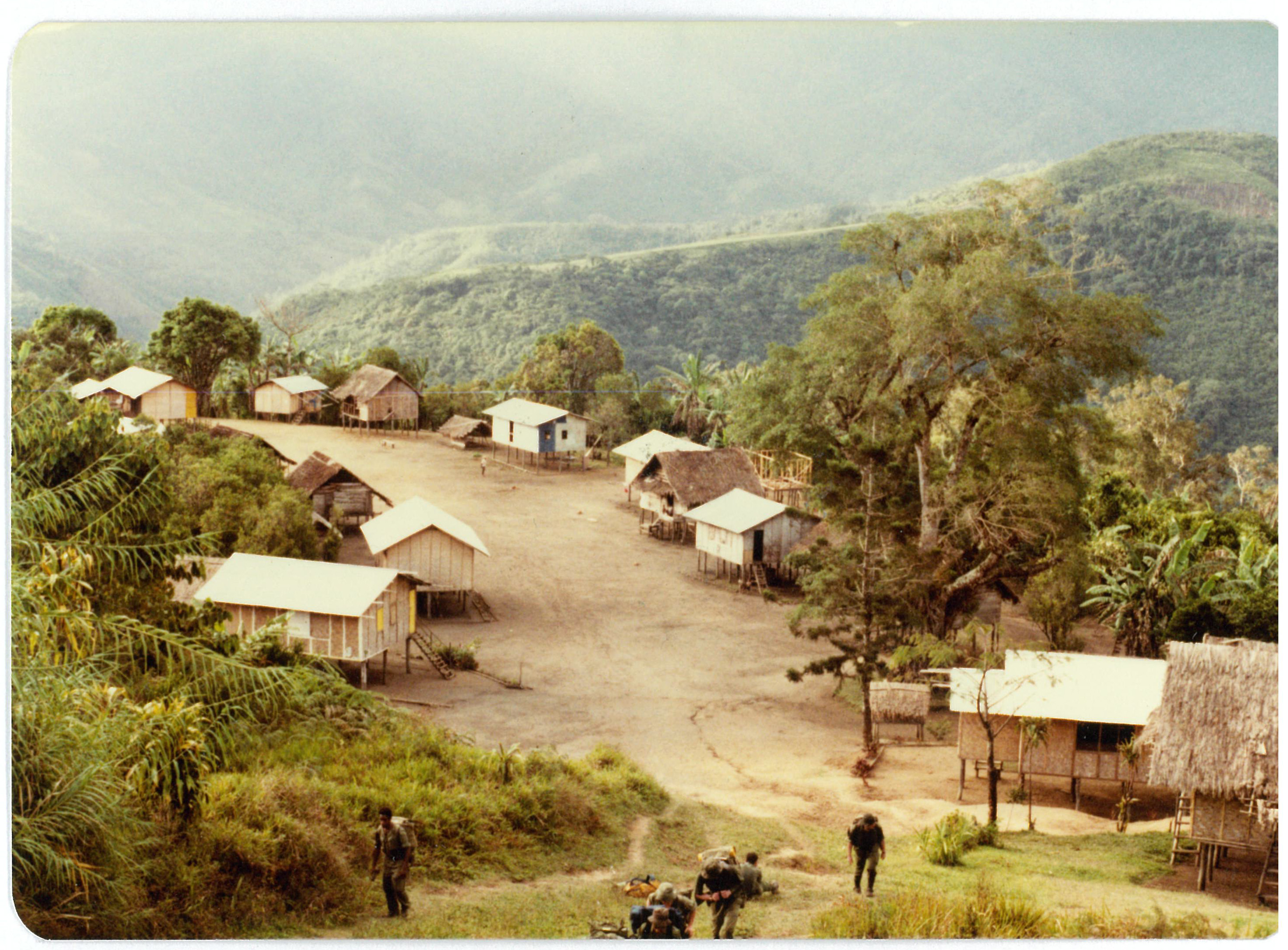
Over the next 25 years, Paul led The Scots College Cadet Unit on nine more Kokoda Track crossings.
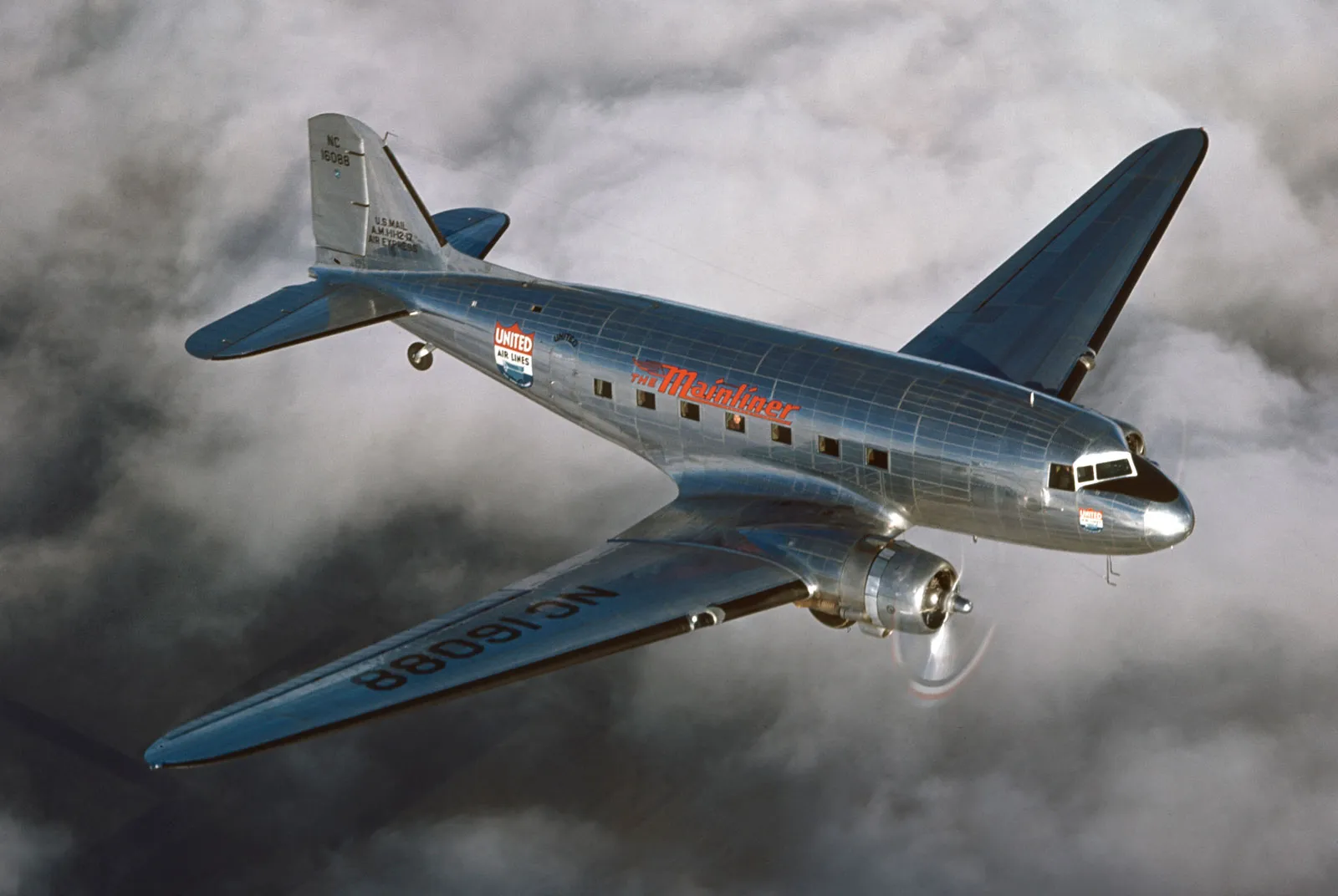
In the early years, Paul remembers flying onto tiny air strips in the jungle in an old Douglas DC-3, twin propeller aircraft, often seen in Indiana Jones movies. Back then the boys would pitch bivouacs (a temporary camp without cover) between trees along the trail, and take turns carrying the 40kg pack containing their only communication device, a AN/PRC-77 Portable Transceiver.
These journeys were unrelenting and unpredictable, providing a glimpse into the conditions endured by World War II soldiers, as evidenced by the numerous relics, such as Japanese helmets, medical supplies, live rounds and grenades found along the way.
Over time, Paul saw Kokoda evolve. The establishment of the Kokoda Track Authority brought structure and regulation to trekking. Today, trekkers benefit from mandatory guides and porters, maximum 10kg pack weights and dedicated campgrounds for up to 40 tents.
Although later crossings became safer and more accessible, the boys’ connection to the courage and sacrifices of our soldiers in the Pacific remained undiminished.
The final generation of Scots trekkers set out in 2009, soon facing one of the most challenging expeditions in the College’s history. Illness struck early, forcing several boys and staff to return under the care of porters, with some evacuated by helicopter. One Cadet was carried at night to a creek to cool a dangerous fever. Despite these setbacks, the group pressed on through Isurava, Iora Creek, and Mount Bellamy, before the expedition was brought to an early end at Efogi when additional staff fell ill.
After recovering, the group finally made their way to the Port Morseby (Bomana) War Cemetery, where bagpipes sounded among the 3,500 headstones as the boys stood in silence.
While only a small number of boys from Bellevue Hill have ever completed the Kokoda Track, the memory of Old Boys who fell in Papua New Guinea is felt every day as Scots boys pass through Mullens Gate on Victoria Road and into the Quadrangle. Flight Lieutenant Philip Mullens (’33) is honoured there, and at the Port Morseby (Bomana) War Cemetery, for making the ultimate sacrifice.